
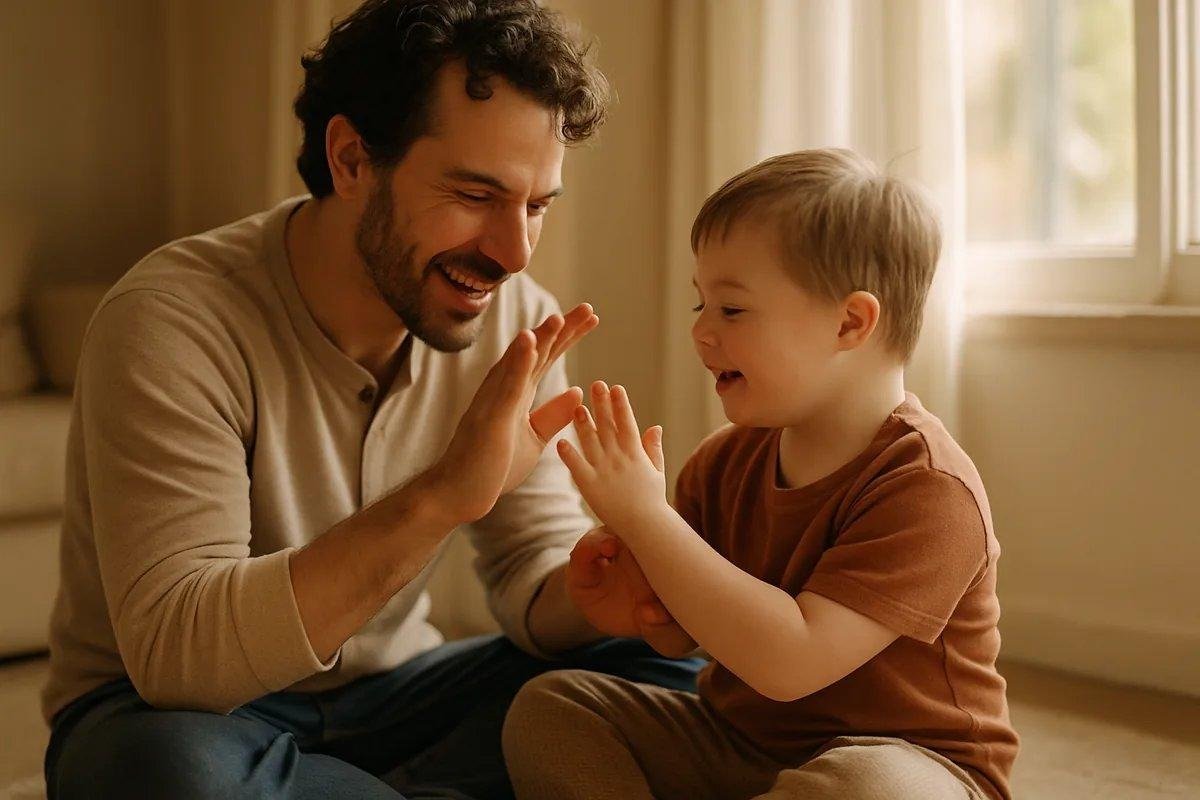
From Waitlist to Tonight: Starting Speech Practice at Home
Reviewed by a licensed speech-language pathologist
Quick answer: You do not have to wait for therapy to begin helping your child talk. Parents can start speech practice at home tonight with short, playful routines built into meals, bath, and bedtime. These habits support language, keep momentum going while you sit on a waitlist, and complement the work a therapist will later do.
Getting on a speech therapy waitlist can feel like being told to stand still. The evaluation is weeks or months out, therapy may be further off, and every day feels like a missed one. The good news is that the time between now and that first appointment is not empty. Much of what helps a child’s language happens at home, in ordinary moments, and you can begin this evening.
Why does the waitlist gap matter so much?
The early years are a productive window for language growth, so the months spent waiting are not neutral time. That is not a reason to panic. It is a reason to fill the gap gently. The Centers for Disease Control and Prevention encourages families who have a concern to act early rather than adopt a wait-and-see stance, and acting early can mean simple things at home as much as it means formal services.
Weekly therapy, once it starts, is only a small slice of a child’s week. What happens during the other waking hours matters just as much, which is why clinicians so often coach parents to carry practice into daily life. Starting now means you are already doing the kind of thing therapy will build on.
How do I start speech practice at home tonight?
The simplest place to begin is talking through what you are already doing. Narrate dinner, bath, and bedtime out loud: “I’m pouring the water. Warm water. Splash.” This is sometimes called self-talk and parallel talk, and it floods a child with words tied to real objects and actions. You are not quizzing the child. You are giving them language to soak up.
A few more things to try tonight:
- Pause and wait. After you say something, count silently to five. That gap gives a child room to respond with a word, sound, or gesture.
- Expand what they offer. If the child says “dog,” you reply “big dog” or “the dog is running.” You are stretching their sentence by one step.
- Follow their lead. Talk about whatever the child is already looking at or holding. Attention comes first, words follow.
- Read together. Point to pictures, name them, and let the child turn pages. Repetition of favorite books is a feature, not a bug.
None of this requires special equipment or a script. It requires slowing down and treating the child as a conversation partner, even before they have many words.
How much practice is enough, and how do I keep it light?
Short and frequent beats long and formal. Five to ten minutes folded into things you already do usually works better than a dedicated “practice session” that feels like homework. A child who senses pressure often talks less, not more, so the mood you set matters as much as the technique.
Accept every attempt as communication. A point, a sound, a single word, all of it counts. The American Academy of Pediatrics offers parent guidance on toddler language that echoes this: respond warmly, model the next step up, and avoid turning talk into a test. If a session starts to sour, stop and come back later.
What tools can help between appointments?
Plenty of everyday items already work: picture books, toy animals, snack time, a mirror. The point is repeated, warm, back-and-forth exchanges, not fancy materials. Understood.org and the American Speech-Language-Hearing Association both describe the same core idea, that responsive, playful interaction is the engine of early language.
Some families also want a little structure to lean on during the wait. Voice-first practice tools such as Little Words give a child low-pressure, play-based speaking practice a parent can start at home in a few minutes a day, which can complement the work a speech-language pathologist will do. Home practice is a supplement, not a replacement for evaluation or therapy, and it should stay short and positive rather than becoming a drill. Whatever you choose, the tool matters less than the daily rhythm of talking together.
Should I still push for an evaluation?
Yes. Home practice and a professional evaluation are not either-or. Progress at home is encouraging, but only an evaluation can tell you whether there is an underlying issue and whether services would help. Parents can request an evaluation directly in most cases, without waiting for a pediatrician’s referral, and early intervention programs accept parent referrals.
It also helps to keep notes while you wait. Jot down words the child uses, how they combine them, and moments of frustration. The CDC’s milestone materials give reference points you can compare against, and your notes will make the eventual evaluation richer and faster.
How do I respect a neurodivergent child while we practice?
Not every child communicates the same way, and language growth is not the only worthwhile goal. The Autistic Self Advocacy Network reminds families that gestures, sounds, and eventually augmentative tools are all real communication, and that a child feeling understood matters as much as producing words on cue. Home practice should honor how a particular child connects, follow their interests, and never pressure them into performing. Warmth and acceptance are part of the method, not a distraction from it.
Key takeaways
- The waitlist gap is not wasted time. You can start speech practice at home tonight with simple routines.
- Narrate daily life, pause to give the child a turn, expand what they say, and read together.
- Short, frequent, pressure-free practice works better than long formal sessions.
- Home practice supports therapy but does not replace an evaluation or a speech-language pathologist.
- Request an evaluation while you practice, and keep notes on the child’s words and progress.
Frequently asked questions
Can I really do anything useful while stuck on a waitlist?
Yes. Everyday talking, reading, and play support a child’s language, and you do not need special training. Home routines are a helpful bridge while you wait.
How much time does home speech practice take?
A few short bursts a day usually beat one long session. Five to ten minutes woven into meals, bath, and play tends to work well and keeps the mood light.
Will practicing at home replace speech therapy?
No. It supports and extends what a therapist does but does not replace an evaluation or treatment. Treat it as a supplement between appointments.
What if my child gets frustrated when I ask them to talk?
Ease off the pressure. Follow the child’s lead, accept gestures and sounds, and model words rather than demanding them. Practice should feel like play.
Should I still get an evaluation if home practice seems to help?
Yes. Progress is encouraging, but an evaluation tells you whether there is an underlying issue and whether services would help. Parents can request one directly.
Sources
- Centers for Disease Control and Prevention: Developmental Milestones / Learn the Signs (cdc.gov)
- American Speech-Language-Hearing Association: Speech and Language Developmental Milestones (asha.org)
- American Academy of Pediatrics (HealthyChildren.org): Language Delays in Toddlers (healthychildren.org)
- Understood.org: Neurodivergent Learning and Parenting (understood.org)
- Autistic Self Advocacy Network (autisticadvocacy.org)